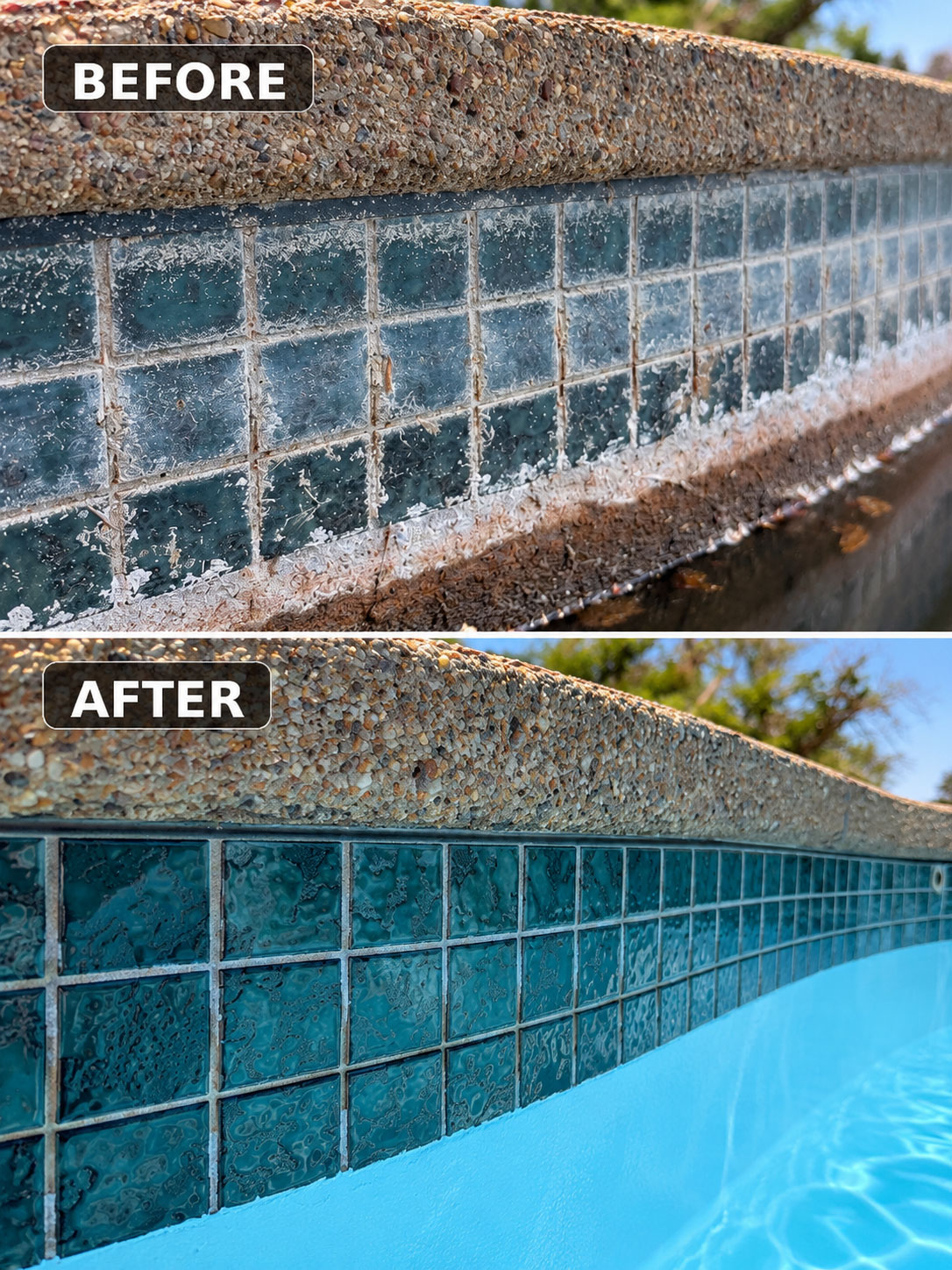
Stop Feeding the Algae


Phosphates are nutrients that algae can use to grow. When phosphate levels build up in a swimming pool, keeping algae under control can become more difficult—especially during warm El Dorado Hills summers.

At El Dorado Pool Cleaning, we don’t automatically dump phosphate remover into every pool.

We test first.

If phosphate removal makes sense for your pool, we determine the treatment based on your water condition, pool volume, filtration system, and actual test results.

We Don’t Just Clean Your Pool. We Track Its Health.

What Are Phosphates in Pool Water?

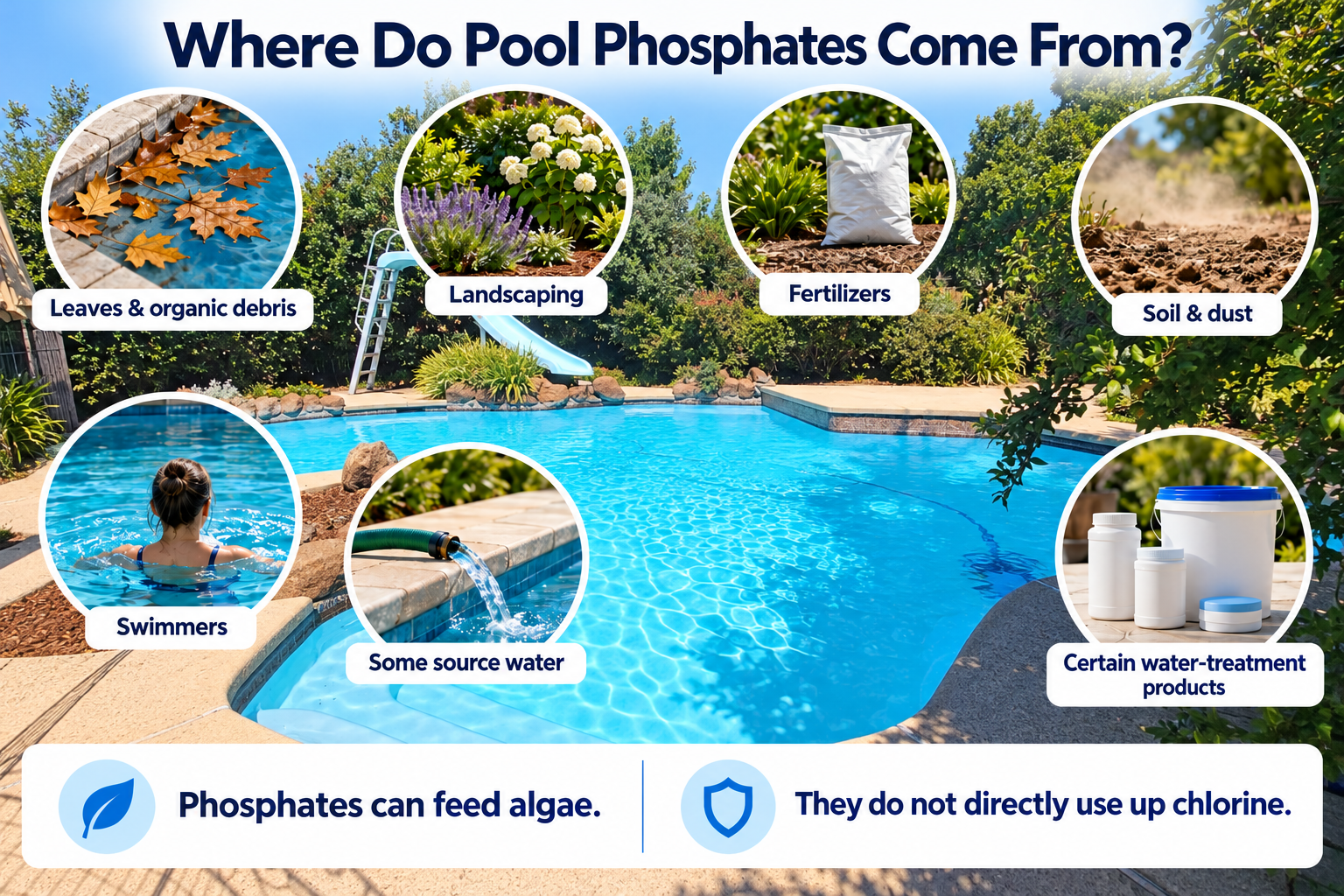
Phosphates are compounds containing phosphorus that can enter swimming pools from several sources, including:

  • Leaves and other organic debris

  • Landscaping around the pool

  • Fertilizers

  • Soil and dust

  • Swimmers

  • Some source water

  • Certain pool chemicals and water-treatment products

Phosphates aren’t algae themselves, and they don’t directly use up chlorine.

That’s an important distinction.

Chlorine and phosphates do not directly react with each other.

The concern is that phosphates can provide a nutrient source for algae. If algae begins growing, that biological growth can increase sanitizer demand and make the pool more difficult to maintain.

That’s why phosphate removal should support proper sanitation—not replace it.


Does Every Pool Need Phosphate Remover?

No.

A properly sanitized pool can contain phosphates without immediately turning green.

We don’t recommend phosphate treatment simply because a pool has phosphates.

Instead, we look at the whole pool:

  • Proper chlorine levels

  • Correct CYA management

  • Brushing

  • Circulation

  • Filtration

  • Filter maintenance

  • Regular water testing

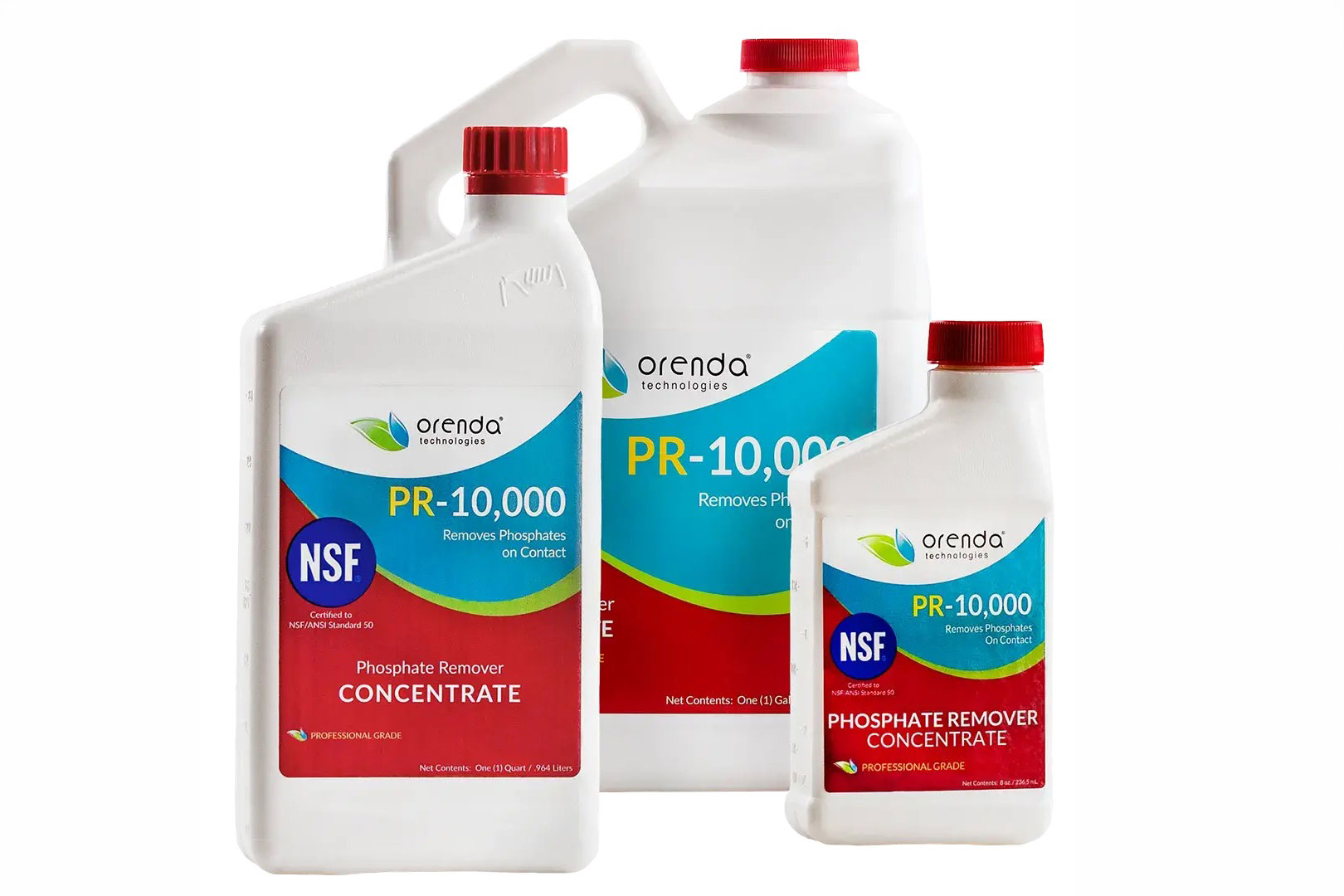
Orenda Pr-10000 bottles of different size
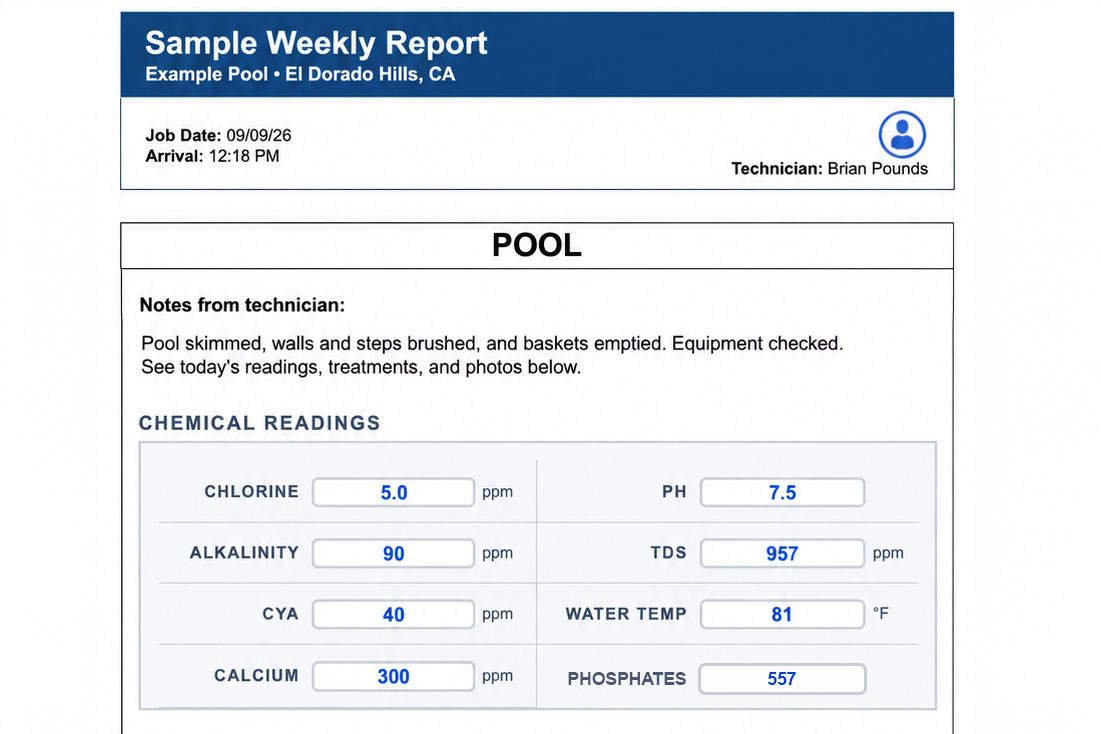
sample weekly report sent to customers in el dorado hills, Folsom, Placerville and surrounding areas
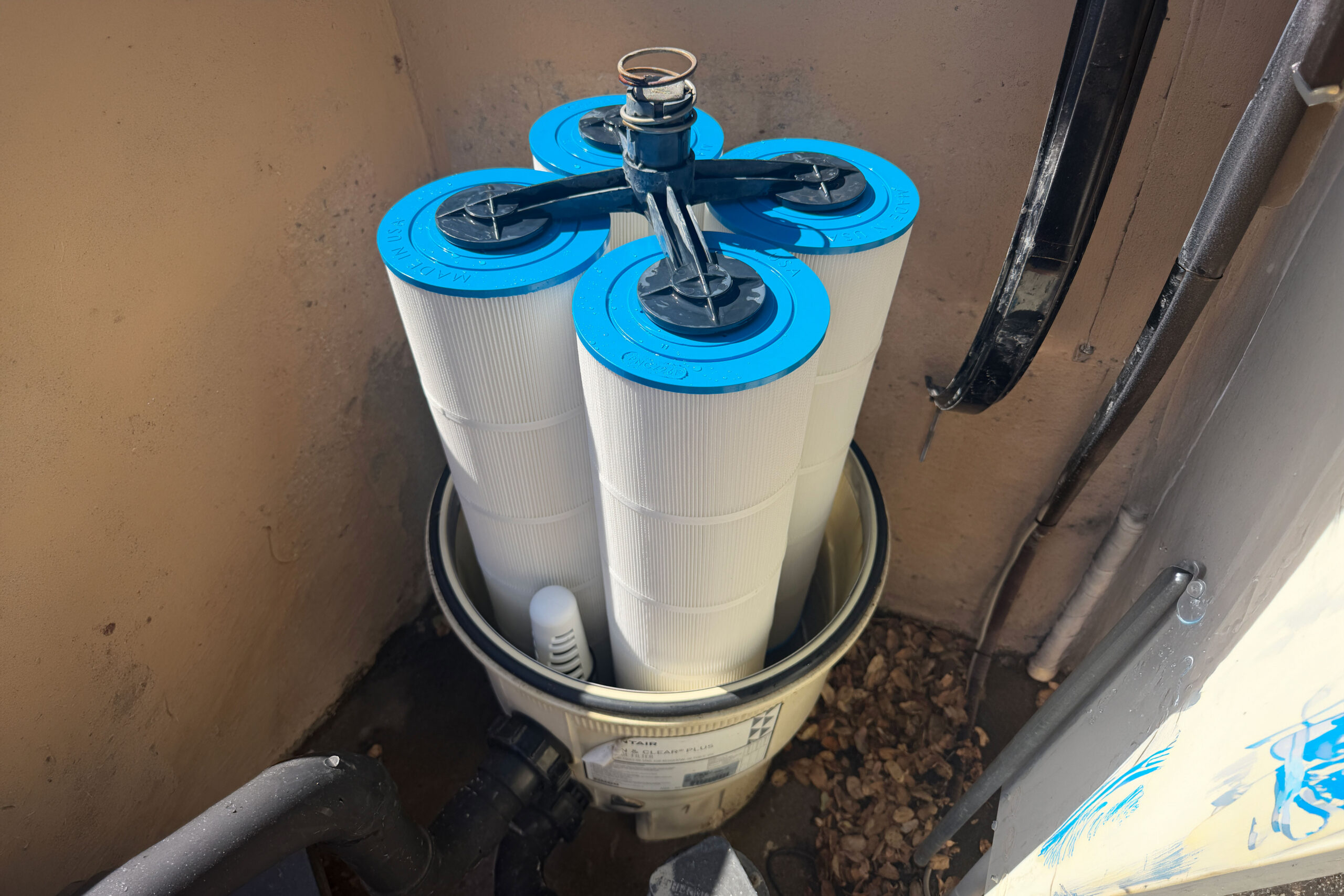
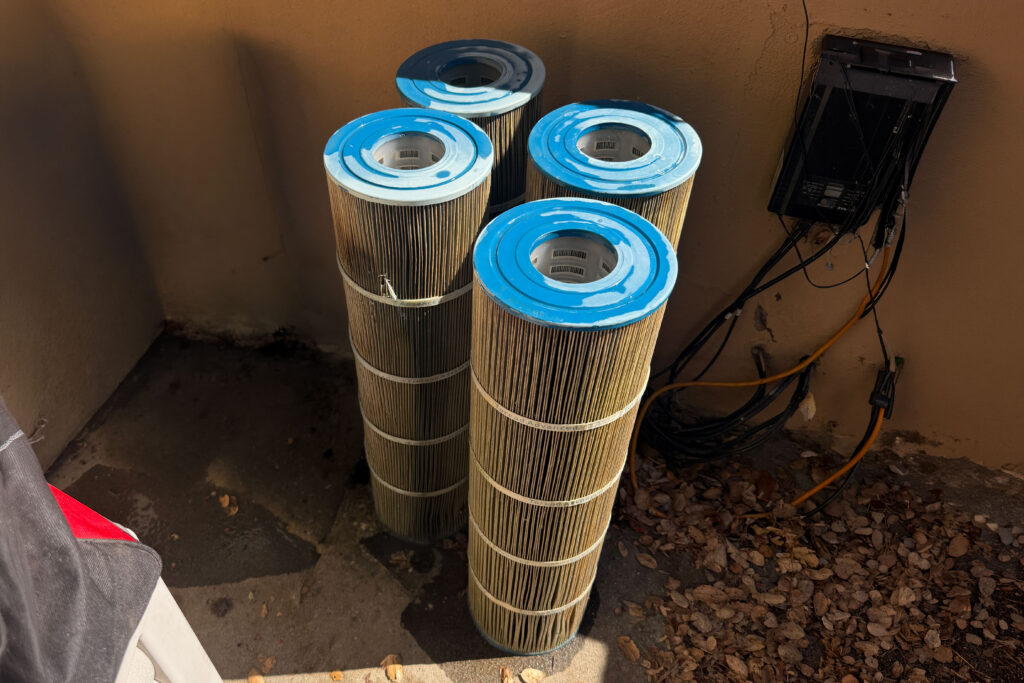
Four pool filter cartridges taht are dirty and green from algae
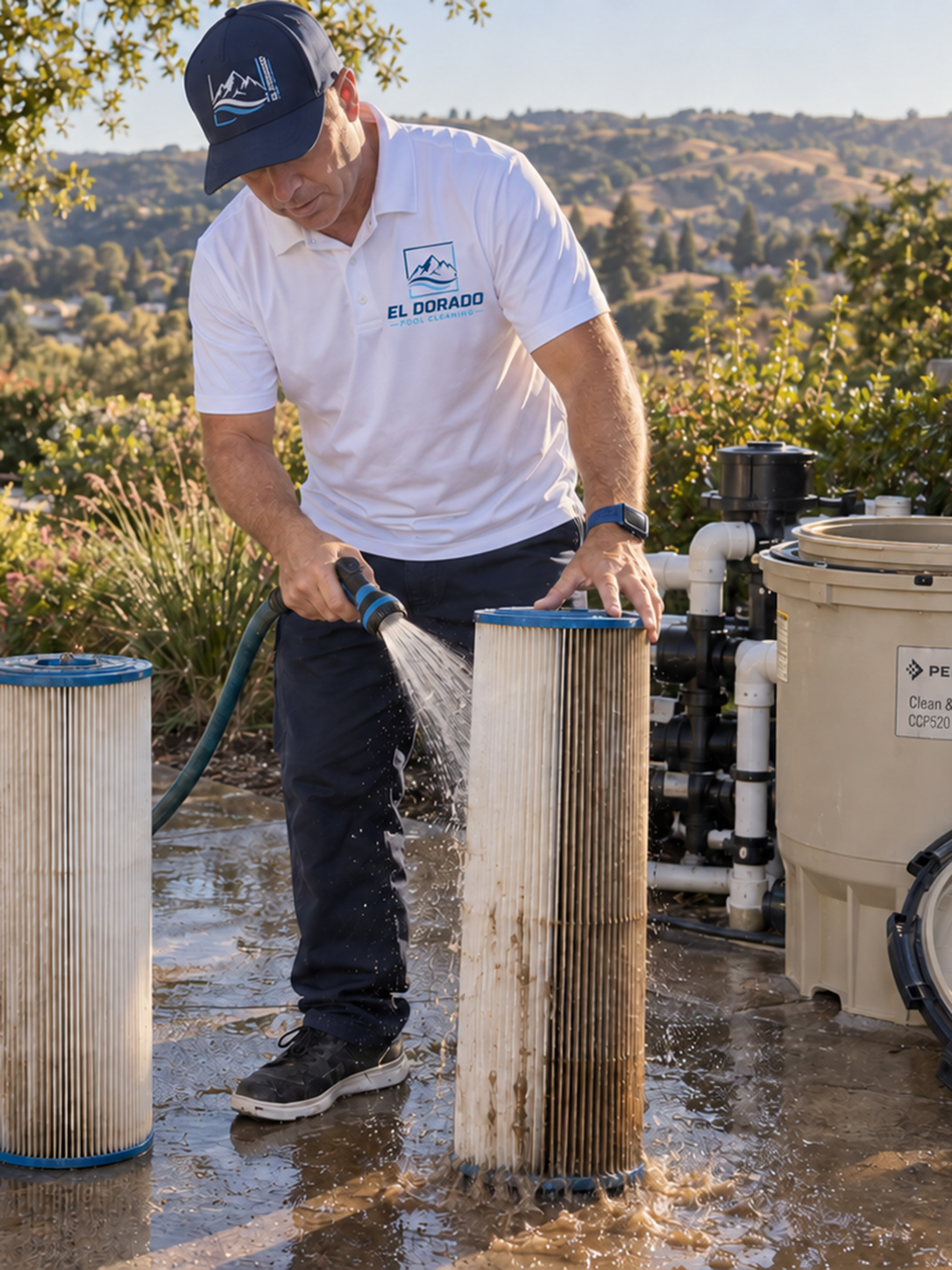
Four pool filter cartridges in the Pentair CCP420 Filter housing. They are clean and new.

Why Did My Pool Turn Cloudy After Phosphate Treatment?

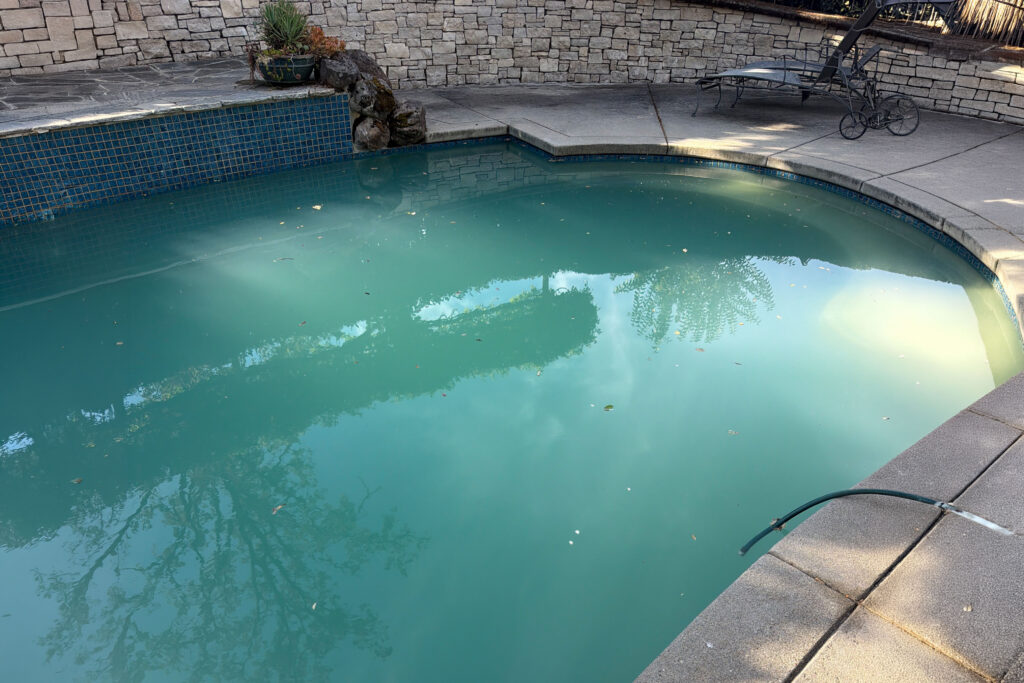
Temporary white cloudiness can occur because the phosphate-removal process converts dissolved material into fine particles.

Those particles then need to be filtered out, allowed to settle, or vacuumed out.


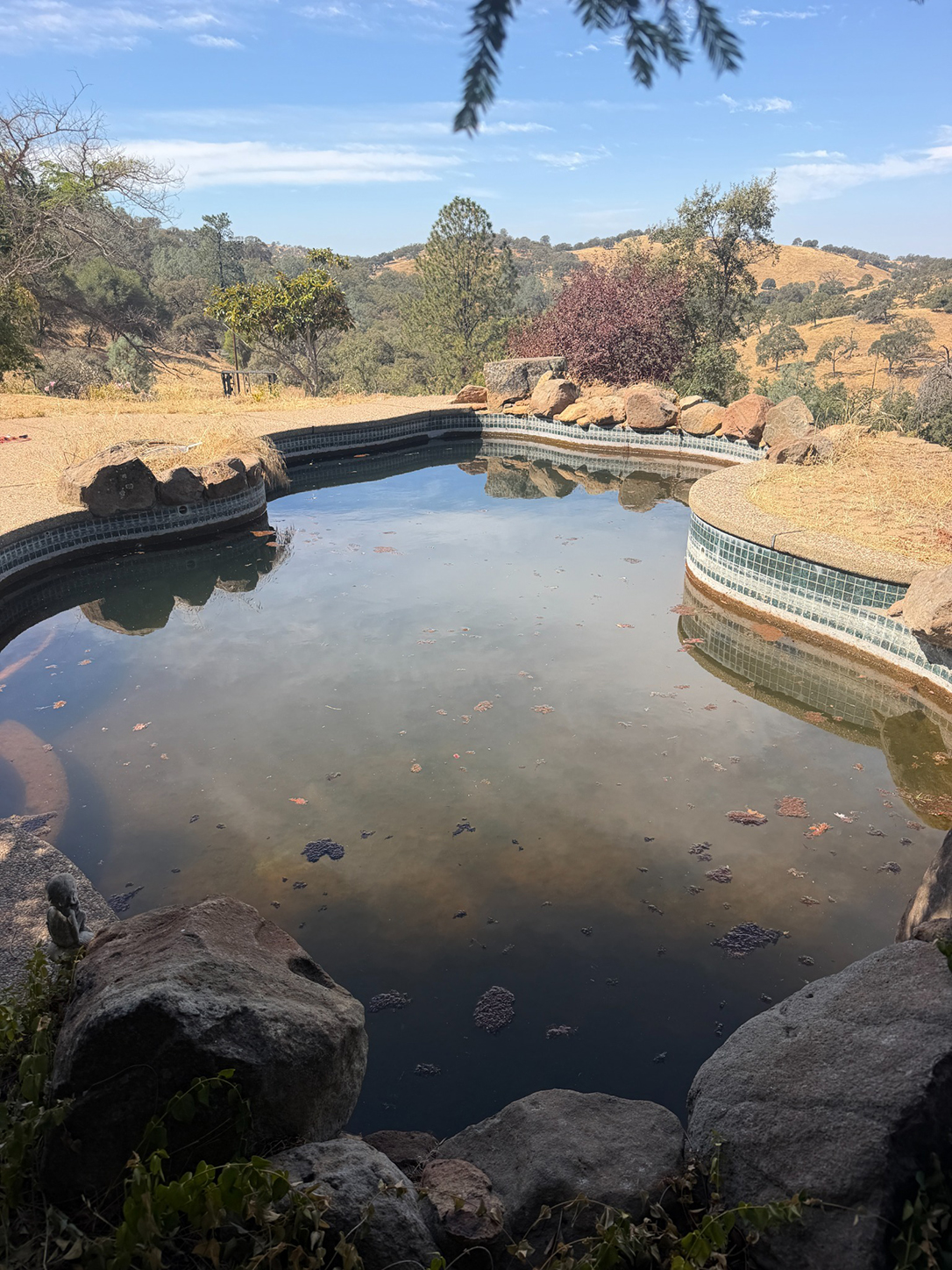
pool water is cloudy from phosphate removal


How quickly the water clears can depend on:

  • Starting phosphate concentration

  • Treatment amount

  • Filter type and condition

  • Circulation

  • Organic Contamination

  • Water temperature

This is also why dumping excessive phosphate remover into a pool isn’t necessarily better.

The filter has to handle everything you’re removing.


How We Remove Phosphates From Your Pool

At El Dorado Pool Cleaning, we use Orenda PR-10,000 Phosphate Remover Concentrate when phosphate removal is appropriate.

PR-10,000 is a professional-grade, NSF/ANSI Standard 50 certified phosphate remover. It reacts with phosphates in the water and converts them into a fine precipitate that can then be filtered or vacuumed out of the pool.

We don’t simply pour phosphate remover into every pool.

1. We Test First

We evaluate the pool’s phosphate level along with the rest of the water chemistry.

Phosphates alone don’t tell us whether a pool needs treatment.

The goal is to identify what’s actually causing the water-quality problem before treating it.

2. We Calculate the PR-10,000 Dose

The amount of PR-10,000 depends on the pool volume and phosphate level.

Orenda recommends limiting a normal single treatment to 8 fluid ounces per 10,000 gallons because phosphate removal creates fine precipitate that can quickly increase filter pressure.

For heavier phosphate levels, we may treat the pool in stages rather than overload the filtration system.

3. We Apply It Correctly

PR-10,000 is distributed around the pool rather than poured directly into the skimmer.

When phosphates are present, the water may begin turning cloudy as PR-10,000 reacts with them.

That cloud is part of the removal process.

4. We Let the Filter Do Its Job

Once the phosphates come out of solution, they have to physically leave the pool.

Some material settles on the pool floor and some gets captured by the filter.

Depending on the treatment and filtration system, the pool may need vacuuming, cartridge cleaning, or appropriate backwashing/filter servicing

This is one reason phosphate removal isn’t simply a matter of adding a chemical and walking away.

5. We Recheck the Pool

After treatment, we continue monitoring the water rather than assuming the problem is solved.

We look at water clarity, sanitizer levels, filtration and the pool’s overall condition.

This becomes part of the pool’s ongoing pool health record, helping us see changes over time instead of treating every service visit as an isolated event.


Phosphate Treatment and Your Pool Filter

Phosphate removal puts additional material into the filtration system, so knowing what type of filter is on the pool matters.


Four pool filter cartridges taht are dirty and green from algae


Cartridge Filters

Fine phosphate precipitate collects in the cartridges and may cause filter pressure to rise. The cartridges may need to be cleaned after treatment.

Sand Filters

The precipitate can be captured by the sand and removed through appropriate backwashing and cleaning.

D.E. Filters

Heavy phosphate treatments require extra caution with D.E. filters.

Orenda specifically warns that PR-10,000 precipitate can rapidly increase filter pressure. A substantial treatment may require the D.E. filter to be cleaned and the D.E. media replaced shortly afterward.

That’s why we consider the filtration system before deciding how aggressively to treat a high-phosphate pool.

Does Orenda PR-10,000 Lower Chlorine Demand?

Not directly.

Phosphates don’t chemically consume chlorine.

Instead, phosphates can serve as a nutrient source for algae. If algae begins growing, that biological contamination can increase chlorine demand.

Removing phosphates removes one of algae’s food sources, which can make long-term algae prevention easier when combined with:

proper chlorine + proper CYA + circulation + filtration + brushing + regular maintenance.

PR-10,000 doesn’t replace chlorine.

It’s another tool we can use to make the pool environment less favorable for algae.


Frequently Asked Questions

  • 1 Do phosphates eat chlorine?

    No. Phosphates don't directly react with or consume chlorine. The concern is that phosphates can provide nutrients that support algae growth. Growing algae can then increase chlorine demand.

  • 2 Does high phosphate automatically mean my pool will turn green?

    No. Proper sanitizer levels can prevent algae even when nutrients are present. Phosphate management is an additional layer of prevention rather than a substitute for proper chlorination.

  • 3 Should every swimming pool receive phosphate remover?

    No. We prefer to evaluate the pool and test the water before recommending treatment.

  • 4 Can phosphate remover make my pool cloudy?

    Yes. Some phosphate-removal treatments create fine particles as phosphates are removed from solution. The particles must then be filtered or vacuumed from the pool.

  • 5 Will my filter need to be cleaned afterward?

    Possibly. It depends on the amount of phosphate removed, the dose, filter type and resulting filter pressure.

  • 6 Can phosphate treatment kill existing algae?

    Phosphate removal isn't a substitute for sanitizer or an algae-treatment process. Existing algae must be addressed with proper sanitation and physical pool maintenance.

  • 7 Can you remove phosphates from a saltwater pool?

    Yes. Saltwater pools can also accumulate phosphates. Remember that a saltwater pool is still a chlorine pool—the salt chlorine generator produces the chlorine.

  • 8 How often should phosphates be tested?

    There's no universal schedule that makes sense for every residential pool. We consider the pool's history, debris load, source water, algae history and previous phosphate readings rather than automatically treating every pool on the same schedule.

  • 9 Do you provide phosphate testing in El Dorado Hills?

    Yes. El Dorado Pool Cleaning provides pool water testing and phosphate evaluation for customers we serve in El Dorado Hills, Folsom, Roseville, Placerville and surrounding areas.


Not Sure What’s Causing Your Pool Problem?

You don’t need to diagnose it yourself.

If you’re dealing with algae, cloudy water, unusually high chlorine usage or recurring water-quality problems, we’ll look at the complete picture before recommending treatment.

Pool Phosphate Testing & Treatment

El Dorado Hills, CA

Call or text 530-987-7428 to request a quote for weekly pool service.

sample weekly report sent to customers in el dorado hills, Folsom, Placerville and surrounding areas
Orenda Pr-10000 bottles of different size
Other pool services
Our Services
Trust El Dorado Pool Cleaning for your pool, get a quote today!

Give us a call or fill out this form for a weekly pool cleaning service quote!

Give Us a Call Today

(530) 987-7428

Get a Quote for Weekly Pool Cleaning Service

    Cleaning Maintenance Skimmer Filtration Chlorine Algae Pump Backwash Vacuum pH Level Sanitizer Brush Debris Water Test
    Cleaning Maintenance Skimmer Filtration Chlorine Algae Pump Backwash Vacuum pH Level Sanitizer Brush Debris Water Test